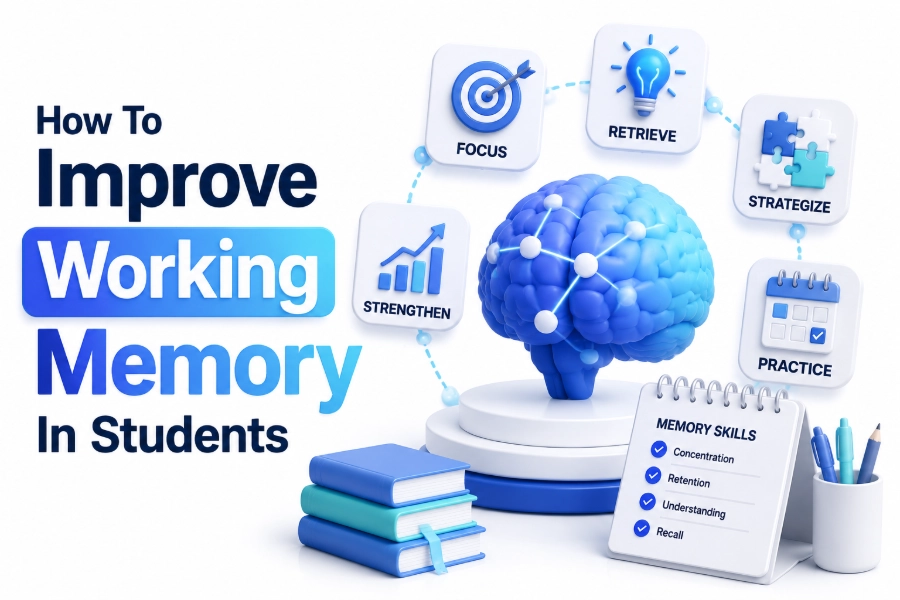
Working memory plays an important role in how students learn, solve problems, and process new information. It allows the brain to temporarily hold and use information while completing tasks such as reading, calculating, writing, and following instructions. When working memory is strong, students can focus better and manage complex learning activities more easily.
Many students struggle with remembering instructions, organizing thoughts, or keeping information in mind while solving problems. If you want to know how to improve working memory in students, the best approach is to use consistent practice, engaging activities, and learning techniques that strengthen memory skills.
Working memory is not fixed. With the right exercises and study habits, students can improve their ability to store and process information. Simple methods such as mnemonic strategies, active recall, brain games, and organized learning routines can make a noticeable difference in academic performance.
What Working Memory Means for Students
Working memory is the brain’s ability to hold information temporarily while using it to complete a task. For students, this skill is essential when following classroom instructions, remembering important details from lessons, and connecting new information with previous knowledge.
Unlike long-term memory, working memory handles information that is currently being used. For example, a student solving a math problem needs to remember numbers, formulas, and previous steps while working toward the answer.
Strong working memory helps students stay focused and complete tasks more efficiently. It supports reading comprehension, writing skills, problem-solving, and overall learning ability.
Why Working Memory Matters in Learning
Students rely on working memory in almost every subject. When reading a paragraph, they need to remember earlier sentences to understand the main idea. During a science lesson, they must connect new concepts with information they already know.
Weak working memory can make learning feel more difficult because students may forget instructions or lose track of important details. This does not mean they cannot learn; they may simply need strategies that reduce memory pressure.
Teachers and parents can support students by creating learning environments that make information easier to process and remember.
Simple Ways to Strengthen Working Memory
- Practice recalling information instead of only rereading.
- Break large tasks into smaller steps.
- Use visual aids such as diagrams and mind maps.
- Encourage students to explain ideas in their own words.
- Include memory games in learning activities.
- Create regular study routines.
Use Mnemonics to Help Students Remember Information
Mnemonics are powerful memory tools that help students connect difficult information with simple words, phrases, or images. These techniques reduce the amount of information the brain needs to process at one time.
For example, students learning the order of planets can use a memorable sentence where each word represents a planet. This creates a simple pattern that makes recall easier during exams or classroom activities.
Mnemonic techniques can be used for vocabulary, formulas, historical dates, scientific terms, and many other subjects. Tools like [Internal Link: Mnemonic Learning Techniques] can help students create personalized memory aids.
Teach Students to Break Information Into Smaller Parts
Large amounts of information can overwhelm working memory. Breaking lessons into smaller sections allows students to process one idea at a time without overloading their mental capacity.
For example, instead of memorizing an entire chapter at once, students can divide it into smaller topics and review each section separately. This approach makes information easier to understand and remember.
Chunking is another useful strategy. It involves grouping related information together so the brain can handle it more efficiently.
Working Memory Improvement Checklist
| Strategy | How It Helps Students |
|---|---|
| Chunking information | Reduces mental overload |
| Mnemonics | Creates easier memory connections |
| Active recall | Strengthens information retrieval |
| Visualization | Improves understanding of concepts |
| Regular practice | Builds stronger memory habits |
These techniques work best when used regularly. Students do not need complicated exercises to improve working memory; small daily practices can create meaningful improvements over time.
Encourage Active Recall Instead of Passive Studying
Many students spend hours rereading notes but struggle to remember information later. Active recall provides a better approach because it requires the brain to retrieve information instead of simply recognizing it.
Students can practice active recall by answering questions without looking at notes, explaining lessons to someone else, or creating their own quizzes. This strengthens memory pathways and improves long-term learning.
Using flashcards is another effective method. Instead of reading the answer immediately, students should try to remember the information first before checking their response.
Use Visualization to Improve Memory Processing
Visualization helps students turn information into mental images. The brain often remembers pictures and patterns more easily than isolated words or facts.
For example, a student learning about the water cycle can imagine clouds, rain, rivers, and evaporation happening in a complete scene. This mental picture creates stronger connections between concepts.
Teachers can encourage students to draw diagrams, create mind maps, or imagine real-life examples to support memory development.
Create a Healthy Learning Environment
A student’s environment can influence concentration and memory performance. A quiet, organized study area reduces distractions and helps the brain focus on important information.
Taking regular breaks is also important. The brain needs time to process and store information, so long study sessions without rest may reduce effectiveness.
A balanced learning environment includes proper sleep, physical activity, healthy meals, and enough time for relaxation.
Improve Working Memory Through Brain Exercises
Memory exercises can help students practice holding and processing information. Activities such as puzzles, strategy games, and problem-solving tasks challenge the brain in useful ways.
Games that require remembering patterns, sequences, or instructions can strengthen attention and mental flexibility. These activities should be enjoyable so students stay motivated.
Some helpful memory exercises include:
- Number sequence activities.
- Matching games.
- Logic puzzles.
- Word recall challenges.
- Pattern recognition exercises.
- Listening and repeating activities.
The Role of Teachers in Supporting Working Memory
Teachers can make lessons easier for students by presenting information clearly and organizing instructions into manageable steps. Simple teaching adjustments can reduce unnecessary memory demands.
For example, teachers can provide written instructions along with verbal explanations. This allows students to refer back to information instead of relying only on memory.
Using repetition, examples, and visual materials also helps students understand and retain new concepts.
Study Habits That Improve Working Memory
Take Organized Notes
Writing organized notes helps students process information instead of simply copying words. Using headings, diagrams, and short points makes information easier to review later.
Students can improve memory by creating summaries after lessons. Explaining important ideas in their own words reinforces understanding.
Review Information Regularly
Regular review prevents students from forgetting important information. Short review sessions spread throughout the week are usually more effective than studying everything before an exam.
Spaced repetition allows the brain to strengthen memory connections gradually. This makes it easier to recall information when needed.
Common Mistakes That Affect Working Memory
Some study habits can make working memory challenges worse. Trying to multitask, studying without breaks, or memorizing too much information at once can overload the brain.
Students often improve faster when they focus on quality learning rather than spending more hours studying.
Avoid these common mistakes:
- Studying with constant distractions.
- Memorizing without understanding.
- Skipping sleep before exams.
- Learning large amounts of information at once.
- Avoiding practice and review.
Benefits of Improving Working Memory in Students
- Better focus during lessons.
- Improved reading comprehension.
- Easier problem-solving.
- Stronger academic performance.
- Increased confidence in learning.
- Better ability to follow instructions.
Improving working memory supports students across different subjects. The skills developed through memory practice can also help with everyday tasks and future learning.
Conclusion
Working memory is a key skill that influences how students understand, process, and remember information. Although some students naturally have stronger memory abilities than others, working memory can improve through regular practice and effective learning strategies.
If you want to know how to improve working memory in students, focus on techniques that make information easier to process. Mnemonics, active recall, visualization, chunking, and healthy study habits can help students build stronger memory skills.
With consistent support from teachers, parents, and students themselves, working memory can become more effective over time. Better memory does not only improve grades; it also helps students become more confident and independent learners.
FAQ
What is working memory in students?
Working memory is the ability to temporarily store and use information while completing tasks. Students use it for reading, solving problems, following instructions, and learning new concepts.
Can students improve their working memory?
Yes, students can strengthen working memory through regular practice, memory exercises, active recall, visualization, and effective study techniques.
Are memory games useful for students?
Memory games can help students practice attention, recall, and problem-solving skills. They are especially useful when combined with other learning strategies.
How does sleep affect working memory?
Sleep plays an important role in memory because it helps the brain process and store information. Poor sleep can reduce concentration and learning ability.
What learning technique helps working memory the most?
Techniques like active recall, mnemonics, chunking, and spaced repetition are highly effective because they train the brain to process and retrieve information efficiently.
0 Comments