Every day, the human brain collects thousands of pieces of information, from conversations and experiences to emotions and learned skills. Some memories last only a few seconds, while others can remain for decades. The ability to store and recall information allows people to learn, adapt, and make decisions throughout life.
Many people wonder how is memory stored in the brain and what happens when we remember something from the past. Memory is not stored in one single location like a file on a computer. Instead, it involves a complex network of brain cells, connections, and chemical processes working together.
The brain creates memories by changing the way neurons communicate with each other. Experiences, emotions, repetition, and attention all influence how strongly information is stored. By understanding how memory works, we can learn better ways to improve learning and recall.
The Basic Process of Memory Storage
Memory storage begins when the brain receives information through the senses. Sight, sound, touch, smell, and other sensory experiences provide the brain with data that can potentially become a memory.
Not every piece of information becomes a permanent memory. The brain decides what information is important enough to keep based on factors such as attention, emotional impact, and repetition.
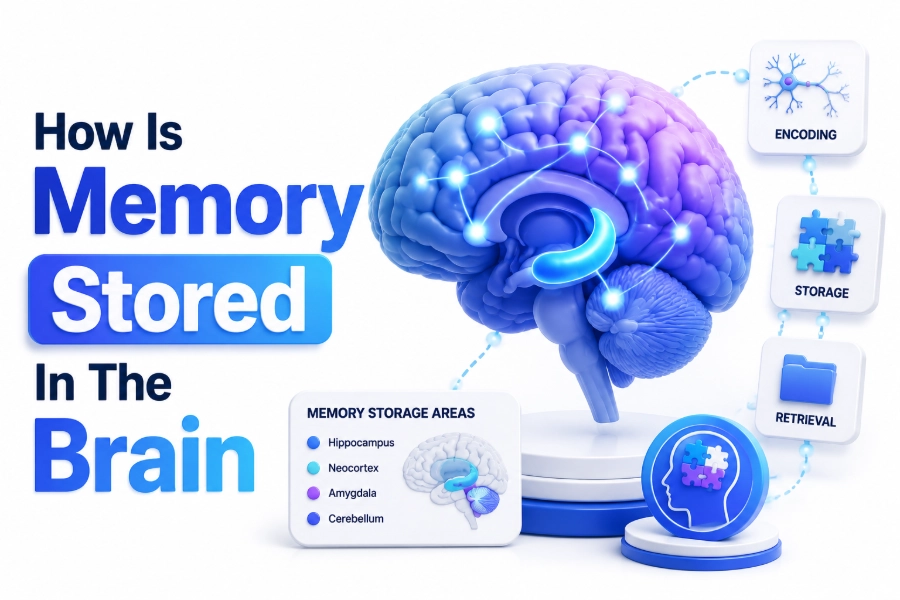
The process of memory generally includes three main stages: encoding, storage, and retrieval. Each stage plays an important role in creating and accessing memories.
Encoding Turns Experiences Into Memories
Encoding is the first step in memory formation. During this stage, the brain converts experiences and information into a format that can be stored and used later.
For example, when a student learns a new word, the brain processes the spelling, sound, meaning, and context of that word. These details become connected through activity between different brain cells.
The stronger the initial encoding process, the easier it becomes to remember information later. Paying attention and creating meaningful connections can improve how well information is encoded.
Storage Keeps Information Over Time
After information is encoded, the brain stores it through changes in neural connections. Neurons communicate through tiny connections called synapses, and repeated activity can strengthen these connections.
This process is known as neuroplasticity, which refers to the brain’s ability to change and adapt. When we practice a skill or repeatedly review information, the related neural pathways become stronger.
Memory storage is not a simple recording process. The brain constantly organizes, updates, and connects memories with existing knowledge.
Key Facts About Memory Storage
- Memories are stored through networks of connected neurons.
- Different types of memories involve different brain regions.
- Repetition strengthens memory connections.
- Emotions can make memories stronger.
- Sleep helps the brain organize and store information.
- Memory changes as people gain new experiences.
The Role of Neurons in Creating Memories
Neurons are specialized cells that transmit information throughout the brain. They communicate with each other using electrical signals and chemical messengers.
When people learn something new, groups of neurons become active together. With repeated practice or exposure, these connections become stronger, making it easier for the brain to access the information later.
The phrase “neurons that fire together, wire together” describes how repeated brain activity can strengthen connections. This principle explains why practice helps improve skills and memory.
How the Brain Creates Long-Term Memories
Long-term memories develop when short-term information becomes stabilized and stored for future use. This process is called memory consolidation.
The hippocampus, a small structure located in the brain’s temporal lobe, plays an important role in forming new long-term memories. It helps organize information before it becomes distributed across different areas of the brain.
During sleep, the brain continues processing information from the day. This is one reason why proper rest is important for learning and memory improvement.
Different Types of Memory Storage
Short-Term Memory
Short-term memory holds information for a brief period, usually seconds or minutes. It allows people to remember information they are currently using.
For example, remembering a phone number long enough to enter it into a device uses short-term memory. Without repetition, this information may quickly disappear.
Short-term memory has limited capacity, which is why people may struggle when trying to remember too many things at once.
Long-Term Memory
Long-term memory stores information for extended periods, from days to an entire lifetime. It includes personal experiences, knowledge, skills, and important events.
Examples include remembering childhood experiences, knowing how to ride a bicycle, or understanding a language. Long-term memories are supported by strong neural connections developed through learning and experience.
Brain Regions Involved in Memory
| Brain Region | Memory Function |
|---|---|
| Hippocampus | Creates and organizes new memories |
| Amygdala | Connects emotions with memories |
| Cerebral cortex | Stores long-term information |
| Cerebellum | Supports skills and movement memories |
| Prefrontal cortex | Helps with working memory and decision-making |
Memory does not depend on one single part of the brain. Different areas work together depending on the type of information being stored.
For example, remembering a happy event may involve the hippocampus for details and the amygdala for emotional responses.
How Emotions Affect Memory Storage
Emotions can have a powerful effect on memory. Events connected with strong feelings are often remembered more clearly than ordinary experiences.
The amygdala helps process emotions and works with other brain areas to strengthen certain memories. This is why people often remember meaningful moments, such as celebrations or important life events.
However, strong stress can sometimes interfere with memory. A balanced emotional state helps the brain process information more effectively.
How Repetition Strengthens Memory
Repetition plays an important role in strengthening memory pathways. When information is reviewed multiple times, the connections between related neurons become more efficient.
This explains why practice is important when learning languages, playing instruments, or studying academic subjects. Repeated exposure helps move information from temporary storage into long-term memory.
Using techniques like spaced repetition and mnemonics can make repetition more effective by creating stronger associations.
Ways to Support Better Memory Storage
- Get enough quality sleep.
- Exercise regularly.
- Practice active recall.
- Use memory techniques such as mnemonics.
- Connect new information with existing knowledge.
- Reduce distractions while learning.
- Review information at regular intervals.
How Mnemonics Help the Brain Store Information
Mnemonics are memory techniques that help people create stronger connections between new information and familiar ideas. They make information easier for the brain to organize and retrieve.
For example, students often use short phrases or patterns to remember complex information. These memory aids provide extra signals that help the brain access stored knowledge.
Mnemonic tools like [Internal Link: Memory Improvement Techniques] can help learners create personalized associations for difficult concepts.
Why Some Memories Are Forgotten
Forgetting is a natural part of how the brain works. The brain cannot store every piece of information permanently, so it prioritizes memories that are used frequently or considered important.
Information may become harder to recall when neural connections weaken over time. This is why regular review is useful when learning new skills or knowledge.
Sometimes memories are also affected by stress, lack of sleep, distractions, or interference from similar information.
How Learning Changes the Brain
Learning creates physical changes in the brain by strengthening and creating new connections between neurons. This ability allows people to continue developing skills throughout life.
When students practice a subject repeatedly, their brains become more efficient at processing related information. This explains why difficult tasks often become easier with consistent effort.
The brain remains adaptable at every age. Continuous learning and mental challenges can help maintain strong memory abilities.
Common Myths About Memory Storage
Many people believe that memories work like exact recordings of past events, but this is not true. The brain reconstructs memories each time they are recalled.
Another common myth is that people use only a small percentage of their brains. In reality, different brain regions are active depending on the task being performed.
Memory is a flexible process that changes with new experiences, information, and emotions.
Benefits of Understanding Memory Storage
- Helps improve study techniques.
- Makes learning more efficient.
- Encourages better memory habits.
- Explains why repetition works.
- Supports better problem-solving skills.
- Improves awareness of brain health.
Conclusion
Memory is one of the brain’s most complex abilities, allowing people to learn, experience, and interact with the world. The process involves millions of neurons, different brain regions, and constant changes in neural connections.
If you want to know how is memory stored in the brain, the answer involves a combination of encoding, storage, and retrieval. Information becomes memories through attention, repetition, emotions, and meaningful connections.
By using effective learning methods, maintaining healthy habits, and practicing memory techniques, people can support stronger recall and better learning. The brain’s ability to adapt means memory can continue improving throughout life.
FAQ
Where are memories stored in the brain?
Memories are not stored in one specific location. Different brain regions, including the hippocampus and cerebral cortex, work together to create and store different types of memories.
How does the brain remember information?
The brain remembers information by creating and strengthening connections between neurons. Repeated experiences and practice make these neural pathways easier to access.
Does sleep help store memories?
Yes, sleep plays an important role in memory consolidation. During sleep, the brain processes and organizes information learned during the day.
Can memory be improved?
Yes, memory can improve through regular practice, healthy habits, active recall, repetition, and techniques such as mnemonics and visualization.
Why do people forget memories?
People forget because the brain naturally removes less-used information and weakens unused connections. Stress, distractions, and lack of review can also affect memory recall.
0 Comments